How to Co-Work: the Business of Being of Service
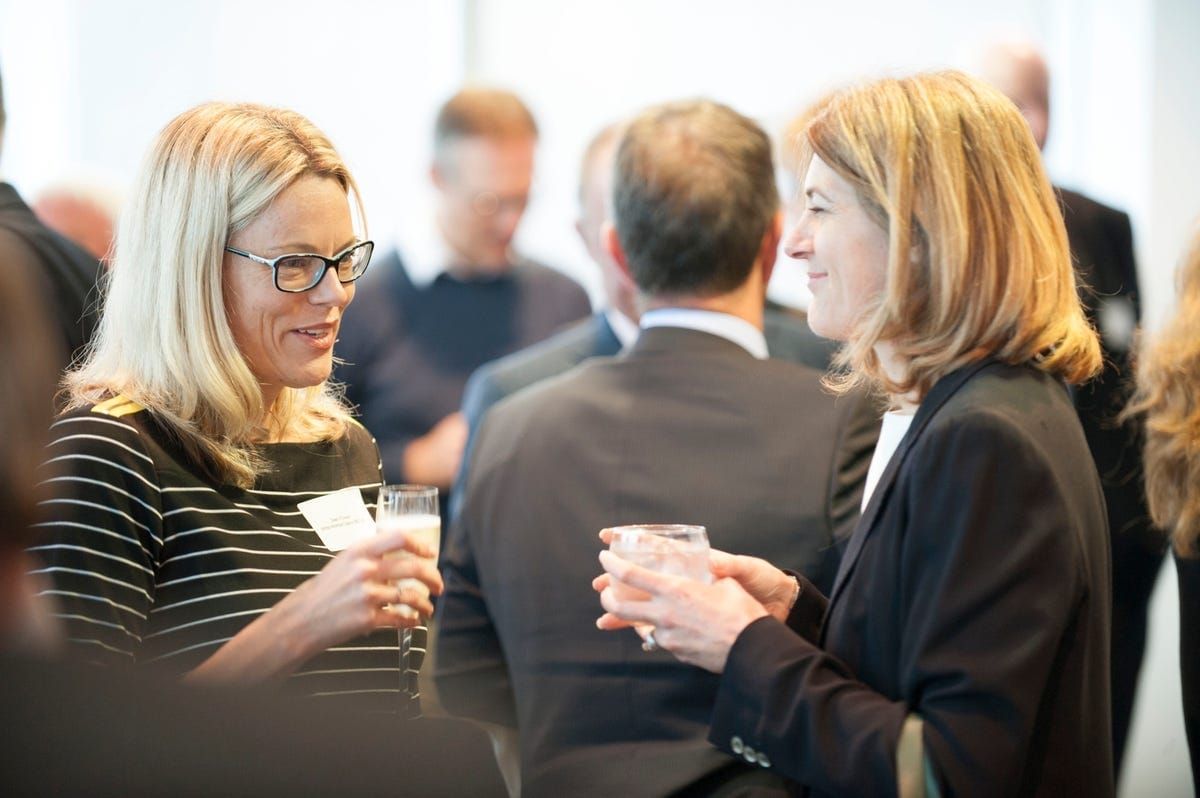
A good friend of mine once said something about networking that I still think about. She said to think of yourself like a glass of water. “There are people you meet who will drain that glass, and there are people who will fill it.” The trick is to spend as much time as possible with the people who give you the feeling that your glass is being filled.
I have been lucky then, as an entrepreneur, because I found a place that has that cup-filling effect on me. The place is called Tink Tank, and it’s a co-working business in Heidelberg, Germany, where I live. And in the three years I’ve been working on WestWord, I've come to rely on it as a place to ask questions, to meet others, and stretch my entrepreneurial wings. In June, I'm even going to give a talk there on how small businesses can avoid the many marketing pitfalls they often fall into. In many ways, Tink Tank is the heart of Heidelberg’s start-up scene. And, like me, the owner Lone Aggersbjerg is an immigrant/expat entrepreneur.
I sat down with Lone to discuss the Corna-time beginnings of Tink Tank, how she didn't just pivot but expanded during the pandemic, and what she sees as the biggest challenges and opportunities for founders in the region.
Our conversation below has been edited for length and clarity:
Brian: Tell me about your career path that brought you to Tink Tank.
Lone: I started in Denmark doing digitalization for municipalities, then moved to Hamburg as a program manager for AOL's German headquarters — I launched AOL 8.0 in Germany. After that, I joined SAP and stayed 15 years. In my last year, I was in the co-CEO office managing programs with eight-figure budgets.
At some point, I had to decide: am I going to stick around and be pensionized, or do I want to try what I thought I could do? Every fourth year at SAP there's a buyout opportunity. I took it. That became my start capital. They put me on garden leave mid-2019, I left in January 2020, and opened Tink Tank in Landfried on February first — the day after.
Brian: And then Corona.
Lone: Early March it hit. I was in the middle of building community, and suddenly you're not allowed to do that. I was allowed to stay open, but it was all plexiglass, masks, Corona tests — you can't imagine how it looked. And I couldn't get any financial support because the company was too young. So I took on consultancy work just to keep the lights on.
But something unexpected happened. Flexible offices suddenly got known, because everybody was sent home. Not everyone had a proper home office — many sat at the kitchen table with three kids doing homeschooling. Already by March, April, people started coming in saying: I just need to go somewhere, work for eight hours, and go home. I need a place to focus. That saved us.
Brian: And you expanded — in the middle of the pandemic.
Lone: In April 2020, I had a fantastic opportunity in Campbell [one of the old US army barracks in Heidelberg]. I opened the second space in October 2022.
The two spaces have different vibes. In Landfried, we have members who've been here from day one — seven years now. Campbell is newer, bigger, a different group. Two different souls, but still one Tink Tank.
What are the common challenges you see founders facing?
The founding phase is underestimated — especially in Heidelberg, where the administration time alone can be brutal. I've heard of people waiting up to eight months for their Gewerbeamt number [Note: At WestWord it took us 6 weeks]. Before you have it, you can't send an invoice. It's not that you made an error — it's just waiting time. That holds back everything.
Then there's navigating the support landscape. There are so many offers for founders — accelerator programs, investor networks, bank guidance — but every offer is attached to a certain organization or requires certain memberships. It's a jungle.
And connections. You could spend your whole week at meetups and still not find the right crowd for your industry. You'd think you could sandbox locally — test things within ten kilometers — but those sandboxes aren't set up.
Are there broader initiatives to support founders in the region?
There's an umbrella initiative called Sunny Valley — a play on Silicon Valley — covering the whole Rhein-Neckar region. The goal is to connect all the different players: technology parks, Startup Heidelberg, IHK, consultancies like ours. Bundle everything so it interconnects rather than operating in silos. (Note: here's a link to a recent Sunny Valley event.)
Heidelberg is seen as founder-friendly, but the problem is that after two or three years, when startups start earning money, most move to Berlin or abroad. You lose the companies right when it gets interesting — and the tax revenue with them. The idea is to keep them here, make the region attractive, and make sure investors look beyond Berlin.
I add to that with flexible spaces where startups can grow until they need their own office. We have models for that whole journey.
So what does Tink Tank do beyond providing a desk?
It’s really about community connection. People come in asking: who can help with corporate identity? I need a bookkeeper, a designer, a salesperson. They don't want to hire full-time — they want someone to open a few doors.
We facilitate those introductions. I know what everyone does, so I can connect the right people. Some have actually co-founded companies after meeting here. We help with working students, job recommendations — really building bridges. We know what people do, what they're looking for, and what they're struggling with. A little matchmaking, too.
If you were starting over, what would you do differently?
I'd have founded with somebody. Being alone is my biggest frustration. The big decisions, the strategy — it's a monologue you keep to yourself. You can talk to your team, but their perspective is naturally colored by their position. It would be good to have another perspective at the top.
News from the WestWord Office
We have entered one of the hard-to-get-shit-done seasons in Europe. In the German state I live in, we have four public holidays in four weeks, and a lot of people use those to maximize their time off. It’s great! But it’s also one of those times in the year when things slow down, decision-makers are out of town, and people play hooky to enjoy the (finally) nice weather. We might as well be in France.
Brian Blickenstaff is Clickin’ Stuff
A video: The guitar maker Fender has gotten itself into a pickle by winning a no-show lawsuit in Germany in which they accused a Chinese company of violating its intellectual property by producing its Stratocaster guitar body without authorization. The body shape has been in the public domain in the US, where Fender is based, for more than 10 years. I made a wee Instagram video about it. But here is a larger breakdown of why the guitar industry has reacted to Fender’s move with absolute fury.
A read: “Most Argentine military officers who underperformed fell behind their peers and were forced into retirement. But Battalion 601 offered a chance for a do-over. Low performers could transfer in, collect promotions by doing the regime’s most horrific work, and then return to the regular army, leapfrogging the peers who stayed clean. They retired with longer careers, higher salaries and better pensions than similar performers who hadn’t taken the career detour.” An interesting look at how Autocrats rely on mediocrity.
This newsletter is brought to you by my company:

Thanks for reading! If you are enjoying this newsletter, the best way you can support me is to share it with someone else you think will enjoy it!