In Search Of Authenticity (And Bread)
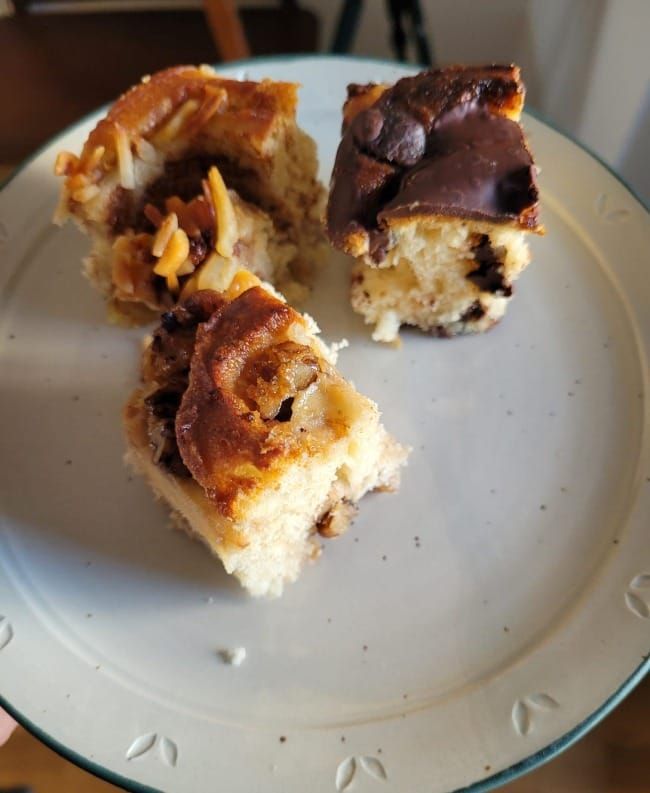
As I write this, I am eating a few cut-up pieces of what Germans call a Schnecke (Schnecke means snail in German). They’re little pastries that resemble an American cinnamon roll, though these are made of sourdough and not covered in frosting, like their American counterparts. (Though one of my Schneckes is covered in chocolate).
In the current German bakery scene, the schnecke seems to be everywhere. And the reason these snails are having a moment is due, in my estimation, to the success of one bakery chain, Zeit für Brot (ZfB). ZfB is not your average bakery. It’s full of contradictions. Instagramable and global in aesthetic; somehow both trend-driving and traditionalist; authentic in some ways, disruptive in others—oh, and did I mention it’s private equity backed?
It’s a fascinating case study in branding and authenticity, and one that I think marketers and business-owners everywhere can learn from.
But to understand ZfB, one must first understand a few things about German bread. Bread plays a central role in German culture, which is evident in the language. Abendbrot (literally “evening bread”) is a synonym for dinner. And in certain parts of southern Germany, Brotzeit (literally “bread time”) means “snack time.” It might not surprise you then that bread is eaten at almost every meal. Breakfasts and dinners are often some form of bread, cheese, and various cold cuts, veggies, and fruits. The second thing to understand is that despite its cultural importance, Germany’s bakery market is dominated by regional bakeries that operate hub and spoke models, where they mass produce fresh bread and truck it out to local bakery storefronts. (Some items, like pretzels, some rolls, and croissants may be baked or par-baked on site). There are three such bakery chains in my area, and all three are multigeneration, family-owned businesses. Now, the three bakeries in my region don’t make a bad product. They’re better than most anything I have found in the US. But when I go to the truly local places—the artisan shops where they’re making everything in-house—I can taste the difference. I can also feel the difference in my wallet.
So where does ZfB fit in?
You may have noticed an irony here: large players mass producing a traditional product under a smokescreen of authenticity afforded them by their business’ age and family-owned status.
ZfB has emerged as a brand in opposition to that model. They produce all of their baked goods in-house in a way that has allowed them to expand into a nation-wide chain, despite the dominance of the regional bakeries (something the mom-and-pop places have largely been unable to do.) In fact, they’ve made their in-house baking their identity, installing windows between their baking and customer areas so people can look in and see the product being produced. And they’ve committed to quality in a way that furthers their authenticity as traditional practitioners, using only sourdough and organic ingredients.
But this is where things get interesting.
Because ZfB’s target customers are not the everyday Germans catered to by the regional chains. They’re tourists. They’re the urban elites. They’re people who don’t mind spending a few extra bucks for a sourdough treat that’s as good to eat as it is Instagram-ready.Its success pairs well with tourism hotspots and areas in German cities that have experienced gentrification. And neither of these things are typically viewed as authentic (certainly not if you’re a local who’s watched the neighborhood she’s grown up in change under the pressure of these external forces.)
A final piece of the puzzle is that ZfB is now part-owned by private equity. To be honest, I have not been a ZfB watcher long enough to comment on how private equity has changed the business, if at all. But it is clear that the typical private equity playbook of shrinkflation, ingredient swapping and general “entshitification” don’t lend themselves to a business model predicated on organic-only sourdough.
What does Authenticity even Mean?
For the last several years, creating an authentic brand or business has been the goal of, well, just about everyone. (Exactly when it replaced “sustainability” as the marketer’s #1 buzzword is hard to pin down).
But what does that even mean?
The truth is a lot of marketers and business owners would struggle to give you an answer—or at least a concise one. I often hear people discuss “being authentic” as if it’s one thing. As if everyone understands.
Rather, we should think of authenticity as a question: Authentic to whom?
And the answer had better be your core customer. If it is not—or rather, if the answer includes a much larger group that happens to include your core customer—you risk muddying the waters and appealing to nobody.
This seems to be something ZfB understands well. They’ve taken the old business adage of “niche down” and applied it to their authenticity signals. Showing that they understand their core customer well, and they don’t care what the rest of the consumers out there think. Because why should they?
The Bottom Line
Successfully communicating authentically with your niche is often a question of ego. Are you able to put your ego to the side in order to serve the market segment that is the best fit for your business? Or are can you not resist going after everyone?
Ask yourself, to whom is your product or business authentic? And then figure out how to communicate that accordingly.
News from the WestWord Office
We have an offer out for a retainer with a new customer! Fingers crossed.
On the marketing-front, my short-form content has taken off in a way I truly didn’t expect. I’m at well over 1 million views (across platforms) in just the last month. And people seem most interested in my observations on culture, which is extremely gratifying, given the central role that cultural understanding plays in our work.
Brian Blickenstaff is Clickin’ Stuff
An old(-ish) band: Coachella, the big Southern California music festival, took place recently. I attended back in 2002, and have fond memories of watching the band Cake perform. I must confess I have listened to almost no Cake in the intervening 24 (!!!) years. But that changed last weekend, when my wife and I listened to Fashion Nugget, their 1996 hit album. What a cool band. Silly, bold, not afraid of a little model mixture. Very much my speed.
A book: I am in the middle of Barbarians at the Gate: The Fall of RJR Nabisco. Published in 1989, it recounts the leveraged buyout of RJR Nabisco, one of the US’s largest companies at the time. That sounds super boring, but it is not at all. And given the state of present day, PE capitalism, it reads like an important scene during a moment in which America changed in a way I think we’re only coming to terms with now.
A YouTube video: I quite enjoyed this takedown of business-guru podcasting (though I must confess that I have never watched a single minute of Diary with a CEO).
A reminder: I am still getting started with this newsletter. If you find it valuable, please consider sharing it with others. Thanks!
This newsletter is brought to you by...
