How Beer Explains Germany's Economic Hangover
There’s a part in the recent Ezra Klein podcast about the China Shock 2.0 that made me hit pause and whisper a few curse words. It was when Brad Setzer, Klein’s guest, was describing the car manufacturing capacity that China has created. It wasn’t just that China had so thoroughly beaten Germany at its own game. (The German economy is largely constructed around auto manufacturing.) China has created a force that could end the German economy.
But China’s sudden dominance in the areas that Germany holds sacred is only half of the strange predicament that Germany now finds itself in. Because for Germany to return to a place of competitiveness—assuming that it can at all—the country will have to dismantle a great deal of what makes Germany Germany.
And I think the easiest way to explain what I mean is to tell you about...beer.
A local brewery went bust recently, after being in business since 1679. It prompted me to make several Instagram videos about the current beer scene. Two of them went viral. They also brought out quite a bit of defensiveness among my German viewers, many of whom insisted that Germany’s beer is the best in the world.
Is it though? And, perhaps even more interesting: Does it matter if it is?
My opinion is that Germany has the best industrially produced pilsner and lager in the world. But Germany also has one of the most disappointing selections of beer in any country I’ve been to. Outside of a few regional beers, like Kölsch or Rauchbier, everything is pils, lager, or hefeweizen (wheat beer). An IPA is still very much a specialty offering. Going to a beer store in Germany is like going into a hardware store and finding blue and green paint in thousands of different shades but a single option for red, yellow, orange… You get the idea.
Why does Germany lack the variety you’d find in most other Western countries? It’s because of two things: regulation and tradition.
Many of the breweries have been around for hundreds of years, ostensibly brewing the same recipe. They also brew beer according to a regulation known as the Reinheitsgebot, aka the German Beer Purity Law. In short, the law stipulates that German beer must contain nothing but yeast, water, hops, and malted barley (or wheat, in the case of wheat beer).
In 1987, the European Court of Justice ruled that the German law violated European free trade and that Germany could not enforce it on imported beer. But the Germans decided to keep enforcing it domestically.
For a long time, this was great marketing. Germany’s national brand has long been “quality,” and nothing screams high quality in the food and beverage industry like a purity law.
But in 2026, after the 20 year craft brewing revolution changed the beer industry in the US, UK, and elsewhere, it is easy to see how the German beer industry has been…”left behind” is not the right word.
Or is it?
The thing about creating an identity around tradition is that it necessitates looking backward. And if you spend too much time looking through the rear view mirror, you might not see what’s ahead of you.
And by “ahead of you” I mean “big players from abroad."
In the beer world, this is most notably AB InBev, the world’s biggest brewery conglomerate. AB InBev has been in Germany for a while, but it recently entered Germany in a new way, most notably with a well known Mexican beer: Corona.
AB InBev was even granted an exemption that allows it to brew Corona inside Germany. This despite the fact that Corona includes corn and rice, two ingredients that are not only noncompliant with the Reinheitsgebot but almost certainly make the beer cheaper to brew than anything brewed under the Reinheitsgebot.
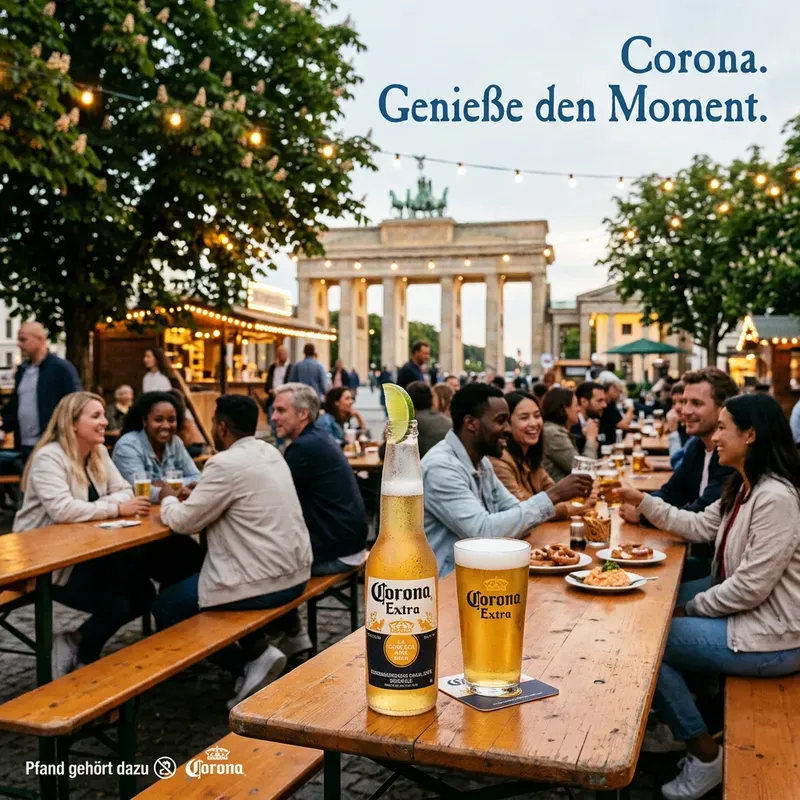
Corona has become a beloved beer in Germany, and though I don’t have a market analysis to share with you, I have plenty of anecdotal evidence. Most notably a trip to the supermarket on the eve of the World Cup final, where I spotted dozens of men rushing home with cases of Corona—the clear winner that evening.
Anyway, the point is, domestic regulations are making German breweries less competitive in some important ways.
It turns out that "tradition" and reputation can only take you so far. And the economics of a globalized market don’t care about either.
And beer is one of a number of German industries that are reckoning with the same problem.
Their focus on the rear view and on quality created a kind of collective arrogance. A belief that the past would govern the future, and that tradition reflected quality and therefore value.
Now, Germany has to react, but regulations and labor laws—the same laws that have created the incredible living standards that my family and I enjoy in Germany—are making the country uncompetitive in the face of a rival that can produce the same quality goods without all the rules.
My opinion isn’t that regulations are bad, or that unions are bad or even that the Reinheitsgebot is bad. I feel quite the opposite, in fact. But the current competitive landscape has put Germany in an uncomfortable situation where domestic constraints—many of which reflect ethics and morality that are core to how Germany views itself—are causing it to lose.
And in order to become competitive again the country, the culture, and the economy will have to fundamentally change.
News from the WestWord Office
I made a lot of noise in my last newsletter about how we’ve changed our focus, and that our goal is to work with more startups.
Why startups? Well, it’s a growing market, and one where I think we can differentiate ourselves and be effective. But it’s also a place where Germany (and Europe) will have to invest if it wants to solve the issues outlined above, and that’s something I am excited to be a part of.
Our offer is tentatively titled “The Lede from WestWord Communications,” and it’s a two week sprint designed to help startups dial in their brand strategy (slogans, and positioning), their founder-lead content strategy, and their PR strategy.
We are still working on updating our website and all that good stuff. BUT we are already hard at work with our first customer!
Will you be our second customer? Email me if so.
Clickin’ Stuff
A film: Recently, I met someone in real life who I first “met” on Instagram—the first time that’s ever happened. The guy’s name is Nick Alfieri, and he’s an interesting fellow. He dropped out of film school at USC in order to play American football here in Germany, with the idea of making his experience into a documentary. He ended up playing for 8 seasons. His documentary is called Unicorn Town. It’s the kind of story I would have been drawn to back in my sports journalism days. Check it out.
A book: A few months ago, after putting the kids to bed, my wife and I sat down on the couch to talk about our days and chat, and I told her about an idea I had. And I could tell she wasn’t listening. I asked why, and she said that I had told her already. This, it turns out, was a kind of pattern or bad habit that I had developed. Not only was I repeating myself, but I often was not making a lot of progress in how far I had thought through a problem or idea. I realized I was spending a lot of time and energy thinking and rethinking through the same ideas. Wouldn’t it be nice if I could spend less time spinning my wheels and more time taking action? I think I found a solution in a book called Getting Things Done. It’s not new, but it might be life changing.
This newsletter is brought to you by my company:

Thanks for reading! If you are enjoying this newsletter, the best way you can support me is to share it with someone else you think will enjoy it!